Showing posts with label Lacma. Show all posts
Tuesday, April 24, 2012
Guy de Cointet's Five Sister at LACMA on Friday
There's this on Friday evening at LACMA. Who doesn't like free access to culture? If you can't be arsed to click on the link, lazy you, it's a live performance of a piece by the late Guy de Cointet*. He was a French artist established in Los Angeles, died in 1983, and has been slowly rediscovered over the last 15 years.
So if you have no plans for Friday night, head over to see some cool exhibitions like the Women Surrealists (it's free after 5 PM for LA County residents), have a quick bite somewhere and attend the 8 PM performance. Everybody I know who's seen them say they were great.
*who, contrarily to what his French proponents like to believe, didn't particularly influence Mike Kelley, even if he liked them very much. Mike said he only saw de Cointet's stuff in the mid-1980s when they were re-staged at MOCA, after he's been doing performances himself for several years already.
Sunday, March 11, 2012
The Rock Negotiates A Turn On Western & Wilshire
Someone posted this very spectacular video on YouTube. The music is freakingly annoying, so I recommend you turn off the sound. The turn is very spectacular. I guess the video must have been taken from the Solair building (?).
I went to meet friends at LACMA yesterday, the talented photographer Tad Beck who currently has a show at LACE, and his husband. Also got the opportunity to meet the artist Jesse Aron Green, for a pleasant mid-afternoon break. Of course we went to see that giant stupid rock, and the trench. That's when I realized that Levitated Mass was going to look like a phallic (yet squat) thing resting atop a very long and narrow... slit?
See below a couple of pics I took at LACMA yesterday.
the trench, with the rock in its carrier in the background
So, from my point of view (contrary to the nice commenter who was discussing the cost issues with me a couple of posts below), it's not a particularly compelling artwork, but what makes it interesting is really the truly epic journey it took from Riverside to Los Angeles - a journey that isn't part of the artwork for Heizer, according to a recent Michael Govan interview in the LAT.
What I find touching about it is how so many people went to see the rock at its various resting stops throughout its slow trip through the Southland, stayed up all night along the route to try and glimpse it, and how 20, 000 people went to see it and spontaneously block-partied for it in Bixby Knolls/Long Beach.
As the rock was being carried through many very poor areas of Los Angeles, the population that came to witness its trek was in many cases one that isn't, usually, in contact with art at all, whether it's contemporary or else. I don't know if the same population has the means to actually come visit LACMA when Levitated Mass is finally completed and unveiled: many of these people don't own cars and might not be able to take very long bus rides to come from South LA to LACMA*
Which made me think that maybe LACMA could try and find some funds quickly for an outreach effort, maybe offering free entrance to its galleries the day Levitated Mass is finally completed? Perhaps some generous donor could also pitch in and fund buses rides from South Los Angeles and back to let the same people who stood in awe following the rock's itinerary experience the full art experience at what is, in essence, a public institution, the County museum**. I think it would be a really great way for the museum to express some thanks to all those people it never gets to truly serve and who instinctively expressed support for a form of art that is normally outside of their daily thoughts. Mr. Govan, I think it's time you should call the Resnicks, the Wallis Annenberg Foundation, or any donors you think would gladly underwrite such an event.
The rock in its cradle, with the Resnick Pavilion in the foreground, I took this picture on top of the staircase at BCAM
* I used to drive surface streets from Long Beach to Mid-City in Los Angeles, essentially taking the same route as the rock did, save for the last mile and a half. Depending on traffic it took between 1 hour 15 and 2 hours. The same one-way journey by bus would easily take almost 3 hours, even with Metro's rapid buses.
** Many people tend to think that because LACMA is "the County museum", it is entirely funded by the taxpayers. It isn't. Only about a quarter of the museum's budget comes from public funds, everything else has to come through private and corporate donors. It is located on County land, yes, land that is unusable for other types of construction because of the tar pits. Imagine the outcry if the County had tried to build a hospital or an elementary school on soil that emanates tar fumes all the time.
Saturday, March 3, 2012
Like A Rolling Stone - Levitated Mass Is On Its Way To LACMA
"Megalith slated to become part of Michael Heizer’s Levitated Mass, en route to Ontario, CA, during the second night of transport to the Los Angeles County Museum of Art, March 1, 2012, © Michael Heizer, photo by Tom Vinetz", photo and legend snatched from LACMA's Unframed blog.
As far as FBC! is concerned, usually "rock" is primarily a type of music that is prevalent in our household, and, secondly, er, natural formations I never really think about, since I stopped collecting ocean-washed pebbles sometimes before I reached my first decade.
But if you live in Los Angeles, and maybe elsewhere, you may be aware that in just a few days, a Michael Heizer piece, Levitated Mass, will be finally achieved/completed at LACMA, after one part of it, a gigantic boulder, will have ended its journey from a quarry a hundred miles away to be finally positioned atop a concrete trench on the museum's premises.
I've heard a bunch of complaints about the cost of the project, how it could be better spent elsewhere, etc. So, to lay matter to rest, I just want to remind everybody that the museum spent about $70,000 on the boulder/the rock itself, and that most of the massive rumored costs of $10 millions for the piece are in fact devoted to transporting the rock from its quarry in Riverside County to Los Angeles. Moreover, these are picked up by the company undertaking the move, Hanjin Shipping, a Korean shipping company; it's not even a private foundation that could, I don't know, fund a children hospital or whatever. Maybe they donate the money and their expertise to experiment with what can be done, but it's not as if they were diverting it from a cancer research fund, and I'm not sure they can actually get a tax write-off for that (since they're foreign).
I don't really know how much the museum spent on building the trench, but as far as having a spectacular artwork in its collection, it cost far less for LACMA than, say, if it were to acquire a gigantic Murakami piece. For the very many non-art people occasionally reading us, there are tons of useless projects that cost tons of money that should be devoted to useful things and nobody ever raise a ruckus about them. From the top of my head, I'd say the Academy Awards Ceremony, any Thanksgiving parade, or whatever is invested into Republican super-PACs is as useless as a gigantic rock atop a cement trench, so please give us art people a break and go complain next time there's a Super Bowl half-time mediocre singer playing that the money would be better spent caring for abandoned horses in Montana or something.
Now, what do I personally think about this particular project? Honestly, I don't give a damn, but I'll likely come and take a pic of the trailer/truck/red toy when it arrives on Miracle Mile. I have nothing for/against Michael Heizer, even though I think that type of spectacular "land art" (in an urban setting) is getting a bit tired. But if it gives LACMA some publicity, good for them.
Now, what do I think about the money spent? Well, I'd rather some sponsor would step in at LACMA and gives them 10 millions to actually augment their collection with art made either by Los Angeles artists, or artists originating from here.
LACMA has "Los Angeles" in its name, unlike MOCA and the Hammer, and I think its duty would be to put artists from the region in their collection, which is pitiful in this regard. The gaps there are from the generation that came in prominence on the international art scene from the late 1970s to now are problematic, not only because many artists are missing, but also because when there are represented, it is very often with minor works. So, if some corporate company - you know, the ones that have feelings because they are people, too- would step and donate money for the museum to buy exclusively art made by artists either working there or who had formative roots in the region, it would be a fantastic act of real philanthropy.
Meanwhile, I do have a beef with LACMA spending $10 millions (of private money, again) on trying to see if Jeff Koons' detumescent choo-choo is feasible. I am very sorry, Michael Govan, but if there is a phallic, detumescent, gigantic mechanical sculpture to be made on LACMA's campus, then why don't you ask Paul McCarthy to do it for Chrissakes?
Gee, that would be the natural thing to do in Los Angeles, Mr. I-believe-I'm-in-synch-with-the-Los Angeles-art-scene-because-I'm pal-with-Jorge-Pardo. There are so many great LA artists who could benefit from special commissions (say, Liz Larner, Marnie Weber, Ken Gonzalez-Day, Mark Bradford...) or simply whose work should be acquired ahead of, say, Ai Weiwei or Christian Marclay. I have nothing against the latter artists, but I've heard over and over again out of town visitors wondering why there was so little art from Los Angeles presented in our local museums. I sure hope the recent spate of exhibitions linked to the Pacific Standard Time project will make a significant change, that is museums are going to try and augment their collections rather than only stage temporary exhibitions.
One last thing about Govan's series of outdoor projects at LACMA: I hate to break it to you, but there is actually one piece by Barry LeVa in your collection that isn't merely a work on paper. It's a sketch/blueprint for a gigantic broken glass piece that the museum could realize if it wanted to*. Because you know what? It belongs to the museum. Have your assistant research "young talents award" if you're unsure. No need to get funds to buy it, just find some corporate glass maker to donate broken glass (on the top of my head, I'd say a US subsidiary of French glass maker Saint-Gobain, but maybe Corning or Anchor King or Pyrex or whatever would be happy to donate), use your museum manpower to lay it, and voilĂ , a giant, wonderful piece by Barry LeVa to be enjoyed by all.
Nobody will accuse you to pander to the art market, local collectors' big egos, or spend way too much money on out-of-town artists (because, as I'm sure you know, Barry LeVa might be living in NYC but he's actually from Long Beach).
No, don't thank me, my pleasure. I love telling local museums when they have great pieces in their collections.
*It's my understanding it should be an outdoor piece, but I may be wrong on that count.
Tuesday, February 21, 2012
Heavy Scholarly Week Is Descending Upon Us
Heya beloved readership,
As some of you know, the College Art Association Conference is descending upon Los Angeles this week, with registration already in full swing earlier today. If you've been following FBC! for a while, you know how deeply ambivalent I am about the thing.
There are two things that give me the willies in general, art fairs and the CAA Conference. One, I do badly with crowds - I love everybody equally on this planet, but far, far away from me - and two, I do badly with people taking themselves way too seriously.
Now, I understand the need people have to network, and that it's convenient for institutions planning to hire future tenure-bound faculty to have a general cattle call HQ, but these being precisely what I'm trying not to do, I was to avoid the thing altogether, especially since I'm being too broke to devote money to sessions dealing with the stuff I laugh about usually (see that second link I posted above).
But CAA has elegantly showed they had no hard feelings against me for making fun of them the last time around and kindly sent me a press pass; so yours truly is going to attend a couple of sessions and then report. I won't tell you beforehand where I'll go, I keep my identity vaguely secret (see "I abhor networking above", or more plainly "FBC! is a sociopath"). Also, I still have more deadlines so the whole thing is way too much, and I just realized today I had to re-read my undergrad nemesis, Stilfragen by Alois Riegl. If you've ever read it, you will understand.
The complete program of the sessions can be found here. Note that to attend, you need to fork over the $$$ to be a CAA member (which entitles you to a subscription to either the Art Journal or the Art Bulletin. I strongly recommend the latter, unless you get the level of membership that entitles you to both journals) plus the cost of attending the conference, or you can get some single-day or even single-time slot tickets. Everything is explained here. There is ONE session that is open to everybody, I understand (please double-check with CAA):
CAA Distinguished Scholar Session Honoring Rosalind Krauss
The Theoretical Turn
Thursday, February 23, 2:30 PM–5:00 PM
West Hall Meeting Room 502AB, Level 2, Los Angeles Convention Center
Chair: Yve-Alain Bois, Institute for Advanced Study
Harry Cooper, National Gallery of Art
Benjamin H. D. Buchloh, Harvard University
Hal Foster, Princeton University
Ewa Lajer-Burcharth, Harvard University
Briony Fer, University College London
Indeed, their website is super handy, so if you're interested in attending some of the conference just spend some time on the site, everything is well-explained. Things I recommend skipping altogether: the receptions, unless you have some alumni something or other going on and you're dying to see that asshole you were in graduate school with and who's doing so well at [insert Ivy League fab job here]. Also, do not, under any circumstance, try to eat or drink anything at the Convention Center. Instead, walk over to Hygge Bakery and raid their dark rye bread, hop on a DASH bus and explore the newish downtown eateries, whatever, but don't waste your money at such a ghastly place. Speaking of the DASH, if you live in Los Angeles and can conveniently bus yourself to the Convention Center, do so to avoid the super expensive parking.
Now, glancing at the program, I'm alarmed at two things. One is purely practical: FBC! still isn't ubiquitous, so it's impossible to attend everything I'd like to go to. Sorry, Rosalind Krauss and distinguished speakers mentioned above. The other thing is there seems to be a majority of modern-to-contemporary sessions in contrast to, say, Classical Antiquity, Medieval Art, Renaissance, etc. And many, many of these modern-to-contemporary sessions are dealing with stuff that has too many -Re and -Identity and -Body in their titles. Hey, art historians in the US of A, have you noticed the 1990s ended up with the century? Anything new going on? No? Oh well.
There are a bunch of local people talking at CAA this year, so check the LA Raw session chaired by Michael Duncan on Thursday afternoon, or the Seeing Is Doing on Thursday morning with Simon Leung, Andrea Bowers, etc.
Now, that is A LOT of scholarly things going on in LA. But, it's not all! On Saturday afternoon, and unrelated to CAA, Thierry de Duve will kick off a 10-weeks seminar on Duchamp at the Mackey Apartments/MAK. The whole seminar costs $140, or you can pay $20 per session (there's a deep discount if you are a member), but this Saturday it is FREE. From 3 to 5 PM, after this the sessions will move over to Mondays, 7 to 9 PM. De Duve is one of Duchamp's foremost scholar, so this promises to be interesting.
After all these scholarly things, I feel like everybody will need to look at real art. Let me remind you that on Saturday night, For The Love Of Mike at the Farley Building will be an event showing Mike Kelley's videos for 24 hours. MOCA has also put together its holdings of Mike Kelley's works (some of them fairly spectacular) while LACMA has done the same with its own super meager collection (3 or 4 works at most.) Please go look at Mike's art and have a thought for him and for all the works he has left us.
Thursday, May 26, 2011
And What If You're House-Bound This Weekend?
If that calamity was to befall you, I'd suggest you check this really great website for the exhibition The Mourners at LACMA because you can see every single statue from every angle. It's beautiful and it will make you want to see the show as soon as you can. And you can prepare for the exhibition by reading all the information about the tomb, the sculpture, etc. It's up until July 31st.
credits for the picture and the website here.
Monday, May 16, 2011
Beat The Clock And Go Back In Time With The Mourners
Speak what we feel, not what we ought to say. (Edgar in King Lear).
This morning at 11 AM, LACMA has started the projection of The Clock, its recent acquisition of a Christian Marclay video that was all the hype in NYC a few weeks back. It's free, the projection lasts 24 hours, and you can drop it pretty much anytime you want. Since last week, the event has been hyped all over LA, to the point that some of my acquaintances who aren't into contemporary art were planning to go see it (hi, Mike!).
As Los Angeles still cannot cope with its inferiority complex toward New York City, the hype has been repeated all over the various local media outlets and social networks over the weekend, prompting us not to miss it. Or else... what?
As you may know, The Clock is a montage of various film and television snippets all depicting images or representations of time passing by, by the minute, for a total duration of 24 hours, starting from 11 AM onwards.
Hence, when the movie projection commences, the viewers are perfectly in sync with the film and can see the time passing by minute by minute, whether there's a watch, a clock, or simply a character telling what time it is.
In terms of technique, The Clock is a brilliant display of editing mastery and obsessive research. Each minute is illustrated by however many seconds of one or several movies make use of the temporal duration that says "it is 11.30", that is, if there are several snippets that tell the viewer "it is 11.30" they will be edited to altogether last the 60 seconds that constitute that 30th minute.
The movies excerpts don't focus on Western cinema only, thank God (or more likely, thank Christian Marclay), and are sometimes repeated when part of their plot revolves around a specific period of time passing by.
Before I went this morning I was somewhat prejudiced against the concept of The Clock, because the whole idea of taking samples from Pop culture and stretching them to 24 hours sounded so much like what Douglas Gordon would have made around 1993. Big yawn. For the record, I am not a big fan of Gordon whom I think is a wildly uneven artist, not himself a stranger to being over-hyped, and whose work is, for me, much more interesting when it veers away from video and cinema.
Christian Marclay, on another hand, interested me more as a sound and music artist making installations - I really like his telephone pieces - and so his new venture into the representation of time in popular culture might have been a good way for him to jump from being a solid artist to becoming a significant one. Because these times are very devoid of significant artists, I feel.
The concept of duration and the passing of time through film pieces has been stretched to death with experimental movies of the late 1960s and early 1970s (just think about Andy Warhol and Michael Snow) so I didn't really see what The Clock could add to it, but I was open to being pleasantly surprised. Maybe the sampling and editing would be incredibly meaningful, maybe there would be some big reveal about Cinema With A Big C, etc.
Instead, complete boredom. The first few minutes makes you realize how good the editing is, what a clever technical feat is being played, but after that it becomes a gimmick and as such excruciatingly boring. Time does stretch and every single occurrence that tells you "it's 11.08", "oh my, it must be about 11.15", etc., etc. makes you want to get the hell out of here.
There isn't any phenomenological epiphany through the movie that makes you experience the concept of "duration", just a mundane experience of boredom. You start noticing that indeed, British actors do know how to act, unlike their US counterparts, but alas it is only 11.23 and how long this thing is supposed to last already?
Oh yes, I can see how stereotypical the representation of women is into all these snippets, didn't I know this already? Damn, only 11.24. By 11.25 what you really notice is how freezing it is in the Bing Theater, while you have some vague recognition of the plot of the snippet being played. Oh, time as a narrative device. How clever. Bet you've never thought of that one. 11.27 and on screen someone's set to die soonish. Incredible. I feel time passing by! Dammit, I totally needed a movie to remind me of, say (and totally randomly) being bored to death in math class when I was 13 and how loooooooong the minutes were. The problem is, boring can be fabulous if it grates. If it changes your perception of things. If it makes you reconsider everything else made in the artistic field in a new light.
Sitting through the entire projection of Fassbinder's Berlin Alexanderplatz is boring and grating and challenging and groundbreaking (yes I've done it). Watching 8 hours of the light slowly (very slowly) changing on the Empire State Building in Warhol's Empire is boring and infuriatingly beautiful (yes, I've done that too). Getting dizzy through the 3 hours that make Snow's La Région Centrale is incredibly boring and mind-boggling and earth-shattering (and yes, I've done that too. Twice). Sitting though The Clock is as boring as watching daytime television. It's not because it's experienced daily by millions of people that it will change your world whatsoever.
The audience, judging from the enthusiastic blurts I've seen on Twitter, is purely there to challenge itself about how long it can stay watching the movie (I've seen breathless tweets such as "5 hours!"), an endearing feeling I guess, while others were really into small details about the sets, the costumes, laughing about how cell phones looked like in 1980s movies, etc. Someone tweeted about "time, art and film merged together", as if, say, Warhol had never done that, or anybody else for that matter.
My feeling was that most people who went to see The Clock didn't know jack shit about video art, experimental movies, contemporary art and so forth. Which is OK, and I don't resent the audience for its lack of culture. In that respect, I just want to be clear that I'm all for museums attracting all types of new people with not very good artworks if needed, if they serve as a gateway to harder drugs, so if the same people who came today end up sitting at weekends festivals at the Anthology Film Archives in New York, bless LACMA and its new 500K purchase.
Unfortunately, The Clock is nowhere in the league of landmark contemporary art films that might be shown at AFA, such as Michael Snow's La Région Centrale. Chris Marker's La Jetée it ain't. Nor Andy Warhol's Empire. The Clock isn't a masterpiece, but one of those middlebrow crowd-pleasers that isn't challenging and won't change the course of art history.
And that would be perfectly OK and appropriate and even fabulous if only LACMA had decided to couple the showing of its new toy with a real, week-long festival about experimental film and video. Instead of jumping on the opportunity to actually educate its public of ladies-who-lunch and donors by showing that, yes, The Clock could be seen in this tradition and even though it is not the masterpiece of the genre, at least it benefits from its history, and it's not entirely cut-off from the Hollywood tradition; LACMA decided to stay in the bland, safe, neutral zone where middlebrow art is only about entertainment and hype.
And that is the problem with hyping up The Clock as the latest great thing to happen at LACMA, instead of educating its audience.
It's a missed opportunity, and one that makes the likelihood of acquiring real masterpieces and meaningful works of art that are actually groundbreaking less and less possible. In that regard, LACMA more or less places itself in the same category as sanitized contemporary media. There is nothing challenging or courageous or even historical about acquiring The Clock or any artwork that is so deliberately easy on its audience.
In short, The Clock is one of these brilliantly superficial piece of work that has no meaningful depth to it, unless you count some undergrad "questioning of the concept of time" as an interesting problematic in an artwork made in 2011. In that case, I advise you to look for a good history of experimental cinema and video art and plow through it, and I guaranty you will have some phenomenological epiphany, once you get to see the movies in real life. And if "brilliantly superficial piece of work that has no meaningful depth to it" is your way of life, I suggest you start reading Bret Easton Ellis pronto. He invented the genre almost 30 years ago. And maybe in that way it is only fitting Marclay's piece would end up in Los Angeles, but is it really LACMA's role to reinforce cultural stereotypes like this?
A note on the presentation: I've been wondering why LACMA chose to do a projection between a Monday and a Tuesday, when a weekend would have been much more appropriate for working people to get a chance to see it, the whole 24 hours of it if they want to, if, as the PR wants us to believe, The Clock isn't to be missed. I haven't checked if The Clock is supposed to "happen" between a Monday and a Tuesday, so maybe that is the reason.
If no, my guess isn't that they wanted unemployed layabouts, ladies who lunch and homeless people to communally and democratically enjoy art together, but that paying the guards and AV people overtime is more expensive on the weekend.
That, or maybe the real film programs were already decided months in advance and that was the only slot available.
Speaking of which, this is a great movie week at LACMA with the Terrence Malick retrospective, and tomorrow afternoon's showing of Orson Welles' Magnificent Ambersons. I highly recommend you go watch these, if you like cinema.
If you indeed pop by LACMA to experience The Clock - and I think you should, so you can see for yourself what I'm talking about - I strongly recommend that you go next door to the Bing to see a gem of a beautiful little exhibition, The Mourners. Unlike The Clock, this show is unlikely to be repeated again any time soon, and unlike The Clock it will make you feel pure beauty in the depiction of the ultimate human experience, death.
The Mourners shows medieval sculptures from the 14th/15th century coming from the Chartreuse de Champmol in Dijon, France, home to the Dukes of Bourgogne, then the most powerful aristocratic family in Europe. As such, they hired the best artists to create their tombstones, and used Claus Sluter to carve the magnificent sculptures of small pallbearers and mourners crying and grieving, that were used to support the tomb slab itself.
Sluter, one of only a handful of medieval sculptors whose name has survived the passing of time, has created a type of sculpture that is a horizontal slab without a pedestal, with a negative space in between the ground (where the body is buried) and the tombstone, while the mourners act as graceful supporting beams*. Each one of the sculpture is individualized, and has a different expression. What you see in this small show is the complete series of mourners (without the rest of the architectural structure, which remains in France), displayed in the same sequence as in the original sculpture.
The display is very sober and restrained, as befits a subject such as death and mourning, with a beautiful lighting that really helps magnifying the expressions of the mourners.
If you go see the show, and I really, really recommend you do, I advise to pick up the catalog too. It's an excellent scholarly one including great comparisons with other types of medieval sculptures and tombstones of the time, and the images are top notch. Every single mourner is represented, so you get a chance to remember their extraordinary look without having to buy a plane ticket to Dijon to see them again. Well, I guess you can do that, too.
I really wish LACMA would advertise the Mourners exhibition and spend some PR money on it, because if you really want to experience what the passing of time means in term of duration (of art), death and, yes, resurrection through art, you will be much more likely to have a transcendental experience with a 700 year-old sculpture that is incomplete to boot, than with the lukewarm 24 hour compilation of Pop culture's greatest hits that is The Clock.
*if you go see the show and browse through the catalog in the adjoining room, you will understand the architectural and sculptural structure better.
Thursday, July 29, 2010
Your Social Life In Anniversary Mode And The Last One Before September
Hello, hello, dear beloved readers,
It has just occurred to me that FBC! was born about 3 years ago, after the first in a series of car accidents that screwed up my life and my body big time; hence the "I can't stand up, I can't hold my neck, my back is killing me, I cannot move my shoulder, I have a mofo of a migraine" litanies spread out from post to post.
Initially not mainly an art blog, FBC! of late has mostly morphed into a public service aimed at letting you know about exhibitions openings in LA. This has been largely due to a) months and months of physical therapy not letting me enough energy to write nor the physical ability to go out and write about what I've seen b) art world fatigue and c) there's no c.
All of this to let you know I'm taking a break from writing here until September, because I have a load of other writing to do and FBC! tends to get in the way, time-wise.
I'll probably post a few pics of shows I've seen recently to fill you in, but not much more, save for the John Cale Of The Week posts, because there's nothing more sublime, genius, awesome, troubling, ethically and intellectually right as John Cale, and if every artist, curator, writer, gallerist, collector in the art world started to act more like John Cale (the sober John Cale) and less like celebretards, life would become much more interesting and beautiful and maybe there would be, ah, I don't know, hope and change made visible. You know, good art being produced, of the challenging, life-changing, epoch-defining kind.
So, the last few things I wanted to mention here before the break: the mini-festival Perform Now! in Chinatown (and elsewhere), starting tonight and ending on Sunday, riding on the current popularity of performance art. It's the second edition and I remember perfectly well missing the first one last year because my car was still at the shop, and I wasn't fit to stand up for very long anyway. Which sucked big time because Simon Leung was performing.
This year I'll attend my friend Nancy Popp's performance on Sat. starting at 2 PM and lasting until 8 PM, "all over Chinatown", on various rooftops. I also recommend the recently-married Skip Arnold (hi Skip!), and there's also Dorit Cypis, Warren Neidich, Matias Viegener, etc. Check the full program on the link above, or on the Facebook event page.
I'm not snubbing the rest out of conceit, but I really need to write, and there's way too much going out in LA in the Summer.
Like, on Sunday, the Fallen Fruit Public Jam event held in conjunction with their Eat LACMA series. I'm sure it will be fun, but I can't attend. Make sure to bring your own fruit. They don't say anything about bringing your own jars and teaching you how to sterilize them, as far as I can tell, nor do they recommend you to macerate your fruit in sugar overnight to bring out the flavors before you cook your jam. Hhhm. I guess it's one of these things where the process matters more than the result.
This being said, have a great weekend, and Happy Birthday FBC!
It has just occurred to me that FBC! was born about 3 years ago, after the first in a series of car accidents that screwed up my life and my body big time; hence the "I can't stand up, I can't hold my neck, my back is killing me, I cannot move my shoulder, I have a mofo of a migraine" litanies spread out from post to post.
Initially not mainly an art blog, FBC! of late has mostly morphed into a public service aimed at letting you know about exhibitions openings in LA. This has been largely due to a) months and months of physical therapy not letting me enough energy to write nor the physical ability to go out and write about what I've seen b) art world fatigue and c) there's no c.
All of this to let you know I'm taking a break from writing here until September, because I have a load of other writing to do and FBC! tends to get in the way, time-wise.
I'll probably post a few pics of shows I've seen recently to fill you in, but not much more, save for the John Cale Of The Week posts, because there's nothing more sublime, genius, awesome, troubling, ethically and intellectually right as John Cale, and if every artist, curator, writer, gallerist, collector in the art world started to act more like John Cale (the sober John Cale) and less like celebretards, life would become much more interesting and beautiful and maybe there would be, ah, I don't know, hope and change made visible. You know, good art being produced, of the challenging, life-changing, epoch-defining kind.
So, the last few things I wanted to mention here before the break: the mini-festival Perform Now! in Chinatown (and elsewhere), starting tonight and ending on Sunday, riding on the current popularity of performance art. It's the second edition and I remember perfectly well missing the first one last year because my car was still at the shop, and I wasn't fit to stand up for very long anyway. Which sucked big time because Simon Leung was performing.
This year I'll attend my friend Nancy Popp's performance on Sat. starting at 2 PM and lasting until 8 PM, "all over Chinatown", on various rooftops. I also recommend the recently-married Skip Arnold (hi Skip!), and there's also Dorit Cypis, Warren Neidich, Matias Viegener, etc. Check the full program on the link above, or on the Facebook event page.
I'm not snubbing the rest out of conceit, but I really need to write, and there's way too much going out in LA in the Summer.
Like, on Sunday, the Fallen Fruit Public Jam event held in conjunction with their Eat LACMA series. I'm sure it will be fun, but I can't attend. Make sure to bring your own fruit. They don't say anything about bringing your own jars and teaching you how to sterilize them, as far as I can tell, nor do they recommend you to macerate your fruit in sugar overnight to bring out the flavors before you cook your jam. Hhhm. I guess it's one of these things where the process matters more than the result.
This being said, have a great weekend, and Happy Birthday FBC!
Thursday, July 22, 2010
Your Social Life
And now back to our usual programming (can't wait to post the next John Cale Song Of The Week).
Your social life will be richly enhanced tonight if you swing by the Pacific Design Center, the new home of anotheryearinla, and get to see the show where FBC!'s ĂĽber-fave, Stephen Kaltenbach is in.
Saturday, if you happen to be in Riverside, don't miss the reading by A.W. Hill at Riverside Arts Project at the Riverside Plaza (Central Avenue Riverside, CA
Your social life will be richly enhanced tonight if you swing by the Pacific Design Center, the new home of anotheryearinla, and get to see the show where FBC!'s ĂĽber-fave, Stephen Kaltenbach is in.
Saturday, if you happen to be in Riverside, don't miss the reading by A.W. Hill at Riverside Arts Project at the Riverside Plaza (Central Avenue Riverside, CA
3545 Central Ave. between Chico’s and El Torito in conjunction with the Terminus Nodus exhibition by Multipoint), from 4 to 6 PM.
Still on Saturday, Scott Benzel whom you know without knowing him (he's behind the soundtrack of the Mike Kelley/Michael Smith "A Voyage of Growth and Discovery") is playing at Kings Road Park Pavilion. Yes, he's the handsome man in the photo above. FBC! is alas too broke to attend, but you can buy tickets here. And, incidentally, have a look at what SASSAS does for sound art and experimental music in LA. I never get to talk about the Cindy Bernard-founded non profit and it's a shame. Support it, people!
Still in Los Angeles, but in Chinatown, the always delightful Charlie James has an opening at his gallery, Nery Gabriel Lemus.
In the already opened category, I warmly recommend spending a whole day at LACMA where, between John Baldessari, Cathy Opie, Tad Beck (within the Thomas Eakins exhibition) and Fallen Fruit (great wallpaper) plus the permanent collection, there are loads of great things to see.
If you feel more comfortable in a smaller setting, don't miss the fantastic Amir Zaki show at LAXart (I'm not so wild about the Divola show at the same place) and the group show at Cottage Home as well as the one at Tom Solomon. Pics to follow soon. If you are not as broke-ass as FBC!, I think you should invest in the artist book Zaki has produced. It's gorgeous, and for an artist book really cheap.
Wednesday, July 14, 2010
Your Social Life
This week will be a happy one, my friends, let me tell you. First of all, Amir Zaki and John Divola both open at LAXart. Two immense smart photographs united in the same space, what's not to like? 6 to 9 PM on Saturday.
Same evening , at Regen Projects is the opening of the Walead Beshty-curated Summer Show, and it's chock-full of artists I really love, Pictures Industry (Goodbye to all that): anybody from Carol Bove, Troy Brauntuch, Tony Conrad, De Rijke & de Rooij, Wade Guyton, Imi Knoebel, Glenn Ligon, Michael Snow, etc. From 6 to 8 on Saturday.
In Chinatown, China Art Objects and Tom Solomon unite forces for a Summer group show at Cottage Home where FBC!'s favorite emerging artist, Juan Capistran, is included, another good reason to go see it, not even mentioning Analia Saban is alo in it, as well as Alex Israel and Jonathan Pylypchuck. Also 6 to 9 on Saturday.
And, if you think you don't have enough "6 to 9 opening on Saturday, my freaking God why haven't they invented teleportation yet????", there's also Kory Newkirk, except it is 6 to 8 PM, almost guarantying yours truly will be unable to attend, but it is conveniently located smack in the middle of LA, at Country Club on 805 South Genesee. Country Club is a gallery that has, IMHO, an editorial problem, since they show fab artists such as Newkirk, as well as lame-duck crap such as Shepard Fairey, Harmony Korine, etc.
Seriously people, if you need to show commercial stuff, so be it, but it's detrimental to your image and to the other, good artists you are showing. A bit more intellectual rigor would be welcome. Unless you have a secret plan to join the Jeffrey Deitch team at MOCA, who knows.
Speaking of which, congratulations to OCMA for taking over the Philip Kaiser-curated Jack Goldstein retrospective from MOCA, a formerly respectable institution that lost its mojo since NYC sent us its own commercial rejects. THE exhibition everybody in Los Angeles has been waiting for a decade, and it's been scrapped for... James Franco? Dennis Hopper bland photographs and mediocre paintings? People, flock see the Arshile Gorky show at MOCA, because it is the very last good exhibition there for a long, long time.
After this rant, let's congratulate also LACMA with the opening next week of the Thomas Eakins, Catherine Opie and Tad Beck trifecta. Super intelligent exhibition. If LACMA folks are reading me, I also wanted to tel you: I love you, but your Twitter feed during "Cell Phone Stories"? Painful. I had to un-follow you a couple of times to clean up my feed. Please, don't do horrible things like this again.
Wednesday, June 23, 2010
John Baldessari at LACMA

I just came back from the John Baldessari retrospective at LACMA, curated by the lovely Leslie Jones for LACMA (hi, Leslie!) and the no less lovely Jessica Morgan for the Tate in London. I wish I could say something really *intelligent* about the exhibition, but alas I got to see too little of it. It's the type of opening where the entire LA art world and then some more (meaning, moneyed people who have no idea what art is) come to attend en masse.
So, every single room I entered was densely packed with at least 40 people I know within the first few yards. Plus all the ones I know but didn't see, etc, etc.
But I was lucky enough to see that one of my most favorite artwork into the entire universe was there, Everything is purged from this painting but art, no ideas have entered this work, 1966 - 1968. This is the "painting" that made me fall in love with conceptual art when I was a teen and saw it at the L'Art Conceptuel, Une Perspective exhibition in Paris, in 1989. Just for this it is well worth seeing the show.
There are of course plenty, but plenty of fabulous Baldessari works in the show, and at this stage, who cares really what the installation is like (it's great, BTW!), since there's plenty of fun to be had and great works to be seen. Smart, playful, fun. What's not to like?
Don't miss Baldessari waving goodbye to ships, don't miss his interpretation of the 7 cardinal virtues and the 7 deadly sins, don't miss anything, and come back over and over again. If you're too broke to take a Summer trip, why don't you have a staycation at LACMA, and at the Farley building in Eagle Rock (Mike Kelley & Michael Smith)? LA will never have seemed so cool in the Summer.
[I lifted the pic from a Google image search and forgot to look for credits. I apologize to whoever took that pic, will try to correct that later]
Monday, March 8, 2010
LACMA Scores A Major Collection And A Masterpiece

What makes the greatness of a museum isn't its dynamic exhibition policy, nor its forward education practices, or its leading public programs.
All of these are fantastic contributions, certainly, but first and foremost it's the collection that is here for years, decades, and even centuries to come, as a testimony to the culture that mattered and shaped an era. A great exhibition policy generally doesn't outlast the curators behind it, whereas a great collection outlives museum-hopping, career-oriented curators forever.
People don't really go to the Met, to MoMA or the Smithsonian for their exhibitions, but "to visit the museum" and see its collection. Because, beloved readers, my friends, most foot traffic in a museum isn't constituted from the savvy art crowd only, but from a general audience, the bulk of them being tourists and/or school children.
Museums in Los Angeles have rich collections, but generally speaking do a poor job of marketing them. Some museums worldwide attract a large audience that comes mainly to see their masterpieces (think the Louvre and Mona Lisa), and it is sad that museums here in Los Angeles fail to really reach out and publicize their holdings. Take the Getty, for example. Many people (actually, far many less than you would think) know the Getty has Van Gogh's Irises, but very few realize that James Ensor's L'Entrée du Christ à Bruxelles is there as well.
Since we are talking about Belgians, how many of you remember that LACMA owns Magritte's The Treachery of Images ("ceci n'est pas une pipe")? The "Magritte & Contemporary Art" exhibition originated at LACMA for a reason, and I think the museum should really try to make it better known to the public that it holds a XXth Century masterpiece, and that because of this reason alone tourists should flock en masse to visit the museum.
They'd get to also see a nice Marcel Duchamp readymade nearby (A Bruit Secret) and one of Frank Stella's Black Paintings (Getty Tomb). Plus a few great Kandinsky, not talking about Giacometti and Brancusi. Not bad, eh?
Let's stay in Northern Countries and highlight one of LACMA's relatively recent acquisition. It's currently up in the European Art Galleries*, and I stumbled upon it recently while visiting the collection with noted Los Angeles painter Mark Dutcher. One of my all-time favorite XVI Century Dutch Painter, Adriaen Coorte, who specialized in still-life, left about 60 paintings, and whose works are not something you stumble upon everyday, to say the least.
There was an exhibition in 2003 at the National Gallery in Washington in 2003 (alas, no catalog, but you can download the brochure) and the one at the Mauristhuis in 2008 (there is a catalog, if someone wants to send me a preemptive birthday present, I would be most grateful).
The Coorte in question comes from the remarkable Carter collection, along with a few Rembrandt, a Saenredam, at least one Frans Hals (maybe more but I only remember seeing one last week), one beautiful still-life by Clara Peeters (a female painter, a rarity for the time), and one Frans Post. Post went on an expedition to Brazil and came back with a magnificent set of paintings, the majority of which were later offered to the King of France and are now in the Louvre collections.
All of this to say that LACMA was the recipient of a major gift through the Carter collection (the gift happened sometimes between 2003 and 2009), and that FBC!'s favorite masterpiece of the lot is Coorte's delicate painting of a bowl of strawberries.
Note that it is a Chinese bowl the strawberries are in, and that this style of still-life, obviously, shares similarities with Spanish bodegones but also with, say, the paintings of France's Lubin Baugin.
With just one little painting, you now realize that global trade and exchanges were already important in the 17th Century, and that through it a sort of international style of painting was already permeating what was then the contemporary art scene. And I'm not even speaking about the reciprocal influences between the Delft and the Chinese ceramics.
Food for thoughts? I certainly hope so. Visual delectation? You bet.
Adriaen Coorte (Holland, Middleburg, circa 1660 - after 1707)
Wild Strawberries in a Wan Li Bowl, 1704
Painting, Oil on paper, mounted on wood, Canvas: 11 5/8 x 8 7/8 in. (29.53 x 22.54 cm); Framed: 18 3/4 x 16 x 2 in. (47.63 x 40.64 x 5.08 cm)
Gift of Mr. and Mrs. Edward William Carter (M.2009.106.5)
European Painting and Sculpture Department.
Photograph taken by myself. Feel free to repost, but please credit and link both LACMA and FBC! Thanks.
* The European Art Department at LACMA is currently undergoing some renovations and re-installation. Some rooms can be closed when you come to visit. To avoid disappointment, you can become a member and then come back as many times as you want. More surprises! The Islamic art department is swell, did you know it?
In other related news, I got confirmation that there was going to be an exhibition with Dorothea Tanning in it at LACMA in 2012, In Wonderland: The Surrealist Adventures of Women Artists in Mexico and the United States, April 1-June 24, 2012
Monday, July 6, 2009
Please Allow Me To Introduce My Friend

FBC! is please to introduce its HUGE readership (hi Pam! hi Nancy!) to the latest offering by special gal pal Theresa Papanikolas, the former Wallis Annenberg Fellow at LACMA and the current curator of European and American art at the Honolulu Academy of Arts.
When at LACMA Theresa curated a great show, "Doctrinal Nourishment: Art And Anarchism In The Times of James Ensor", which did a great job of explaining Ensor's influences as well the artists he later influenced himself, and putting him in the context of the artists of his times, including FBC! favorite, Félicien Rops.
It was a jewel of a beautiful show to look at, and I'm very happy that finally the catalog/book is out. You can purchase it on Amazon, where it is amazingly inexpensive, prior to visiting the current Ensor show at MoMA.

Another reason why you should buy this book? Yours truly is on a writing deadline, of the kind that pays the rent, unlike amateurish (if LA-centric) blogs, so I won't have time to write much for you guys before a few weeks, and I'm not sure I'll be able to post more stuff from Renee Montgomery, our current blogger-in-residence. It's OK, it's the Summer, what's better than a little Ensor to reflect on the spirit of our times?

Pictures:
1) the cover of the catalogue,
2.) James Ensor. Masks Confronting Death. 1888. Oil on canvas, 32 x 39 1/2" (81.3 x 100.3 cm). The Museum of Modern Art, Mrs. Simon Guggenheim Fund,
3) Artwork: Baron James Ensor (Belgium, Ostende, 1860–1949), The Doctrinal Nourishment (Alimentation doctrinaire), 1889–95 (detail), LACMA, print, etching printed with tone and hand-colored with white gouache and with red, yellow, and blue chalk and watercolor, image: 9 3/8 x 7 1/16 in. (23.81 x 17.94 cm); sheet: 9 1/4 x 11 5/8 in. (23.5 x 29.53 cm); mat: 16 x 20 in. (40.64 x 50.8 cm), purchased with funds generously provided by the Joan Palevsky Bequest (M.2007.6). © James Ensor Estate/Artists Rights Society (ARS), New York/SABAM, Brussels, and 4)
Thursday, June 4, 2009
Every Dude’s Guide to Dating at LACMA

[By FBC! guest blogger Renee Montgomery].
What better place to impress and seduce a woman than at an art museum? -- Society’s treasure trove of excellence, emotion and eroticism. LACMA’s encyclopedic collection of 100,000 artworks from around the globe certainly offers plenty of opportunity for you, the eligible dude, to display your inner-Renaissance man while touring the galleries with your date. Should you require some remedial help, following are a few suggestions on how to put your best foot forward at LACMA with the object-of-your-desire.
Start strong on your date on the first floor of the Ahmanson building. There in the stunning Modern Art galleries you can impress your girl with your knowledge of art AND athleticism. For instance, linger before Magritte’s "Ceci n’est pas une pipe" and say something like: “Eighty years since Breton, this painting takes on greater meaning now, what with our consumer culture’s exploitation of the subliminal messages of images. I couldn’t smoke though if I wanted – considering my triathalon schedule.” In case your date has doubts about the sporty type, go sensitive with Picasso’s "Head of a Woman" from 1909 (78.6) by stating: “Picasso’s analytical cubism - the grand-daddy of so much of our new civic architecture. But I don’t know, deconstructing women? It just seems wrong!”
Underscore your romantic side on the third floor in the impressive Medieval galleries: Staring down at the massive "Tombstone of Alberto Barbiero" (49.23.6), try something like: “Speaking of knights and chivalry, I like to think I’m as progressive as the next guy, but the late 20th century was confusing to many of us. Is it okay that I open the car door for you?”
Where else to establish your intellect and total grasp of current affairs than on the fourth level. Stroll through the world-class Islamic galleries, reflecting on works from Iran, Iraq, Palestine and Afghanistan, then muse: “The situation in the Middle East is so complicated, isn’t it? It will be a challenge for Envoy Ross to engage Tehran, with Iran becoming a nuclear threat supporting Hizbollah, Hamas and Syria, as his two books describe.”
Lastly, take in the American Art galleries in the next building. Americana, mom, apple pie – where else to prove one’s emotional grounding? There you can exclaim: “Wow! This 1857 'Quilt with Buchanan’s Banner and Rose of Sharon Motifs"'(30.1) really reminds me of my Grandma. Every time I pull up that tattered old quilt she made for me, I remember what’s truly important in life.” If that doesn’t seal the deal, then the Byrdcliffe Arts and Crafts desk (AC1993.176.15.1) in the next gallery, will. Looking wounded, pine on: “This desk reminds me of the reason my old girlfriend and I broke up. She criticized me for writing her letters rather than text-messaging. You know, letters? – like with stamps, in the mail, creating anticipation and expressing the writer’s urgent affections in longhand?”
Finish your tour in the Museum Gift Shop. I recommend purchasing a single iconic postcard to remind her of your amazing afternoon together: “Here, I’d like to buy you this. It reminds me of when I was so flustered in the first gallery – in my total lack of preparation, afraid I’d say something lame that put you off.” Touchdown!
[Renee Montgomery sneaked into the museum world when the guards weren’t looking. Despite her long term job at a big L.A. art museum, she preferscollecting road kill to contemporary art. A mother living in the Crenshaw district, she can usually be found cruising with camera on
Southern California freeways in a Joan Didion ecstasy, with country music blaring ont he soundsystem. She graduated from colleges with cows on campus]
Wednesday, May 13, 2009
Pompeii And The Roman Villa At LACMA

Yesterday I had the pleasure of meeting a former colleague for lunch, and one thing leading to another I ended up visiting my first exhibitions since that last car accident. I had overestimated my energy level by a too wide margin, so today I'm paying it with extreme tiredness and increased pain. In passing, I apologize to the friends I didn't say hi to yesterday or didn't spend that much time with, but my body sorry state got the better of me and I had to get back home. Also, for any of my friends and social acquaintances, a word of warning: while I totally appreciate the sentiment behind your desire to hug me when we meet, please absolutely refrain from touching my right shoulder. The left one is fine, but the right side of me is a major block of pain. I know it's not obvious because I'm not in a cast or wear bandages, but believe me, it hurts.

Anyway, it was pretty good to look at art again, especially since I got to see the really excellent Pompeii And The Roman Villa exhibition. You all know the story, 79 AD, Mount Vesuvius erupts, and buries an entire region under an inferno of ashes and lava. Fast-forward to the 18th century, the site is accidentally re-discovered, excavated, and a very-well preserved series of buildings and artifacts is unearthed, helping generations to re-discover Roman art in particular and Roman civilization in general, fueling the Neo-Classical movement in art, and a couple of centuries later the Roman-inspired Hollywood tradition of macho men fighting in togas and crimson capes.
This show was excellent for all the good reasons that make an exhibition memorable. First of all the material exhibited was first-rate. When almost all the pieces in an exhibition are good, you know you're in for a good ride. No little fragment of a copy of a copy here, but carefully selected outstanding pieces.
Then the curators did a great job of explaining the influence of Greek art on Roman art, but also separating the genuinely native Roman art from the Greek-inspired one. I loved the few pieces where they presented archaic-style (in French we say "archaĂŻsant") Roman pieces made to look like antique Greek art, but with variations that clearly showed they were much later works, made to look like Greek originals. The labels were good at telling the audience these were either a case of local Roman artists trying to make fake works to sell to collectors, or on the contrary the result of commissions by the patrons wanting to have work "in the style of".
Generally speaking the educational part was really excellent, never lacking in explanations, clearly written without taking the public for a bunch of illiterate retards who don't know any better than look up words they don't understand.
It's good to see labels and didactics aimed at a higher level than 6th grade. With one glaring exception, a label placed right next to a beautiful bronze depiction of Epicure that managed to totally distort the philosopher's theories, succumbing to the Wikipedia-culture of our age, alas. Speaking about the subtext of many of the labels, it seems directed at taking stabs at "rich patrons", "wealthy Romans", etc. Now I understand curators in this country are generally frustrated at having to deal with our modern equivalent, the generous-but-not-so-knowledgeable-trustee-cum-philanthropist-patron-of-the-arts, but the way this was approached wasn't very subtle. I thought.

The other great thing about the show was the abundant examples of works made in various mediums, including lots of bronze sculptures (usually we see more marble than bronze), and some fresco fragments which emphasize the germane, original Roman painting styles. The Romans were also masters of glassworks, and if the examples chosen for the exhibition were few they were all absolutely exquisite. And there was one mind-blowing object, a cup made of obsidian with inlays (I think they were gold filigree and enamel, but I didn't write down notes, so I may be totally wrong here) depicting Egyptian-style scenes. Now this is a type of object you rarely see when going into a Roman art show or permanent collection, so busy are the curators usually perpetuating the mantra of "the Greek massive influence on the Romans". Aside from this there were few mosaic pieces, sadly, as the Romans were really masters of that art, but you could see some gold jewelry and a few examples of banquet dinnerware.
Apart from the class subtext I was mentioning earlier, the other underlying message about this exhibition is the obvious importance of "appropriation" (to borrow a contemporary term) for Roman artists and art audiences alike, whether they were appropriating/being influenced by Greek or Egyptian artists (and earlier, Etruscans ones through whom the Greek influence was initially channeled). This message is repeated in the last room of the exhibition, which contrarily to Christopher Knight I thought was absolutely appropriate, in the sense that following the message of the rest of the exhibition (the Romans being influenced by the Greek, OK?Shall I repeat it again?) we understand how this same mechanism repeated itself when Pompeii was unearthed in the 18th century and European artists started to be massively influenced themselves by what they saw.It doesn't matter that most of the neo-classical art looks dreadful to contemporary audiences, if only because to many modern audiences the Greek-derived Roman art also appeared dreadful once the distinction was made (following Winckelmann), for a long, long Purgatory period that only now is starting to be lifted. I was also happy that in addition to the mandatory Christopher Wright of Derby (an 18th century painter specialized in volcanoes) whose work you see each time an exhibition calls for the representation of some eruption or other, the curators added a painting by Valencienne*, a French painter established in Italy who made exquisite plein-air landscape paintings on paper a long time before the Impressionists decided to follow in his steps.

As far as I was concerned the only faux-pas in this exhibition was the inclusion of a piece by Eleanor Antin that looked so contrived and out of place in the show it managed to make that LACMA mantra of using contemporary artist to "update" historical art totally gimmicky. No, it is not because an artist makes a work that refers to the popular culture view of Roman art that the works is necessary relevant to the exhibition, no matter how it tries. Unlike the neo-classical works exhibited in the same room (as well as some Roman bronze originals), the Antin piece was trying too hard to be ironic, like twenty-something hipsters priding themselves on their ability to be sarcastic to mask their lack of intelligence and emotional empathy. When the entire exhibition was striving to underscore the path genuine cultural foreign influences can take to organically contaminate and then fertilize an entire civilization, centuries apart, the post-modern abstract take used by Antin in her piece lacked depth and breadth to make a useful connection. It's a curatorial mistake I feel LACMA should be weary of making, as not all exhibitions necessarily benefit from juxtaposing oranges and apples, nor does it behooves contemporary artists to see their weakest work selected out of context to "actualize" ancient art. But it certainly would benefit living artists in Los Angeles to go see this exhibition, if only to ponder the powers of appropriation, influence and other themes that were at play in the long history of art a long, long time before Jeff Koons & consorts.
[Aside from this, the exhibition runs through October 8th, and I advise all my beloved FBC! readership to go see it, high price notwithstanding, as it is one of the most beautiful and well-thought exhibition to see around.]
* The Louvre has an outstanding collection of Valencienne works on paper.
All photo credits can be found here. I wasn't able to copy and paste them on FBC! so I'm resorting to linking to the page.
Wednesday, March 11, 2009
Your Social Life In The Spring

Spring in the air, and recession-proof art events are being held all over LA. It has opened last month already, but tomorrow (7 to PM) is the discussion/roundtable/publication launch of the Sarah Cain & Rebecca Morris exhibition curated by the lovely Nancy Meyer (Hi Nancy!) at the Fellows of Contemporary Art, 970 N. Broadway, Suite 208. The show is up until April 26.
It conflicts with tomorrow's Franz West lecture at USC which follows the show he's having at LACMA where, incidentally, the "Art of Two Germanies" exhibition is very, very good.
There are some shows opening on Saturday, like Rebecca Bird at Paul Kopeikin and if you are in Eagle Rock you should absolutely go to High Strangeness, 12 artists with works about "the paranormal and the unexplained". Jeffrey Vallance (currently also on view at the Hammer), Doris Cypit and Dana Duff are among the artists. The night before, same place, sound event with Charlemagne Palestine!
Have fun everybody, and don't forget to answer the poll at the bottom of the page: FBC! needs to make some dough to keep on providing content to my avid readers!
Thursday, December 18, 2008
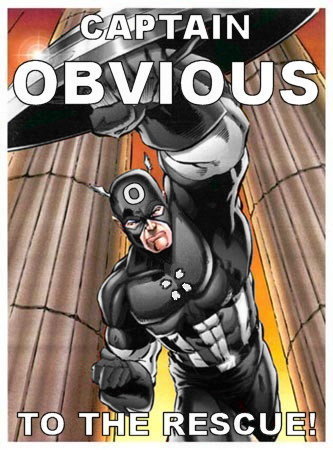
Captain Obvious And The MOCA Saga
UPDATE: at 9.15 PM PST, please read the NYT article, and don't jump to conclusions.It's Thursday, and there's another MOCA Board meeting today, which Eli Broad will attend. As I've said all along - I'm putting this sentence here because you're apparently not a blogger if you don't hammer the fact that you wrote the exact same thing a week ago, and you're fabulously right. Bloggers have to be priggish and condescending, in case we'd be mistaken for real journalists who have to dabble in more facts than opinions - anyway, as I've said before, methinks Broad is the best option, and so does Broad apparently, if we believe what Christopher Knight writes today in the LAT "Culture Monster" blog. I'd suggest you guys read it rather than the opinions of agitated bloggers, including my own sweet self, because Knight is better informed, and he's paid to follow the story, which my Frenchy self isn't.
There's been an uproar against the proposed LACMA merger, with bloggers left and right thinking LACMA only interest is in grabbing MOCA's collection and leading the museum on a leash. As an aside, there's been a very funny exchange between Brady Westwater and Rosette Delug (MOCA Trustee) on their respective "walls" on Facebook. I doubt both read FBC!, but, hem, if someone knows Delug, please let her know it's possible to adjust her privacy settings on FB. (Just sayin'). Still on Facebook the MOCA Mobilization group has been rather quiet, maybe because their initial goal of getting 10,000 signatures on their petition, downgraded to 5,000, hasn't been met.
What no ones seems to have considered about the LACMA official proposal, because my esteemed blogger-colleagues apparently don't really know how museums are run from the inside, is that this famous proposal may have been designed by LACMA precisely to look like an unacceptable solution to push the MOCA Board to accept Eli Broad's proposal instead. Because, you see, it isn't in LACMA's best interest to merge with MOCA and suddenly find itself morphing from an encyclopedic museum to a bloated contemporary art operator with 3 geographically distinct facilities, and now dwarfed collections of classical or non-Western art left behind to be, what? Rejuvenated by contemporary artists? After a while it starts to be stale, you know. In addition, LACMA cannot afford the expenses of adding staff (in case you wondered: only a tiny fraction of LACMA's staff is paid by the County), maintaining more facilities when their own trustees cannot find the will to upgrade conservation and storage, etc.
In short t is no more desirable for LACMA to merge with MOCA than it is for MOCA to be chained to LACMA. But LACMA had been approached, they had to make a formal move toward the MOCA Board, and they came up with whatever would be possible conceptually for LACMA in case they had no other choice as well but merge to keep MOCA's collection in Los Angeles.
And for Tyler Green who was up in arms about the fact that the proposal seemed like a swipe at Jeremy Strick during embattled times: a) having two directors leading one merged institution seems impracticable if not ludicrous and b) I cannot imagine a Board accepting a merger while keeping a leadership that has proven ineffective, and c) Christopher Knight yesterday called for Jeremy's resignation as well, and I'm sure Knight likes Jeremy as well as the next person.
Knight finally said what everybody in Los Angeles knows: Jeremy is the nicest guy ever, and everybody likes him, but he grandiosely failed at leading the museum in a responsible fiscal manner. While drawing a salary that's a little bit inflated in comparison to MOCA's deficit. I personally think Jeremy should stay on until the museum is out of the woods, that is, if it accepts Broad's proposal, if only because there's no one else to act at the time being.
And finally, I'm going to play the blogger/journalist game of "this is what you people should do, look how I'm right at virtually managing museums from my laptop": Not only the MOCA Board should be well inspired to accept Broad's proposal and to ask for Jeremy's resignation, as well as renew itself with more competent members, but when it finally finds the magic person who's going to direct this museum, it should hire a real manager as well. No, not the mythical "art person who's a beloved fundraiser who can also run the day-to-day operations while being fiscally conservative". What MOCA, like every museum needs, is one Director who's in charge of the program, etc AND a second person who's doing all the boring legwork and accepts the unrewarding position of being an able administrator. Look at LACMA: without Melody Kanschat, Michael Govan would have much more trouble running the museum as it is. And when MOCA has found this magic team, the next director should be very well inspired to rethink what MOCA's position is in a city where the museum landscape is already littered with contemporary art institutions, how to stand out locally as well as internationally.
Anyway, this is my last post about it, I'm really sick of the saga. And no "Your Social Life" today as well. I'm sure you can manage without me.
Picture of Captain Obvious found here.
Tuesday, December 16, 2008
The MOCA Suspense Is Unbearable...
If you've been following the drama, you've seen the LAT article about the offer of a merger with LACMA, under its current leadership. If you read it carefully, basically what it does is accepting the collection in exchange for ... only shouldering the operating expenses. It doesn't haul MOCA out of the hole it dug itself in, so financially it's not the best solution.
Basically what it's saying is, if you guys have to declare bankruptcy, we'll make sure you fab' collection stays in LA, we'll help you run your day-to-day operations, while maintaining the pretense of independence for your institution.
I can see many reasons why this wouldn't work (deciding which exhibition gets staged where, dealing with an over-inflated curatorial team in the Contemporary Art Dept. as well as the cultural shock for MOCA staff when dealing with LACMA's bureaucracy. As well as the impracticality for LACMA of running a satellite operation with 2 distant buildings, and how it would tilt its operating budget away from the "encyclopedic" premises the museum has been founded upon.
Nevertheless, given how MOCA's Board has run itself so far, they may choose it. I still think they'd be better inspired by accepting Eli Broad's offer, but we can now only wait and see... Stay tuned, and let's cross fingers!
UPDATE: there's no update, except that Michael Govan (hi Michael!) expands a tiny bit (not really) on the merger proposal, and that at almost 6PM tonight there is no leak yet or press release about MOCA's Board meeting. No doubt we'll know more later (this is the emptiest filler I've ever written, how more obvious a sentence can be, tell me?). Meanwhile, the LACMA offer looks more like a PR move than anything else, so far. They've been approached, they had to say something about it, so they adopted the stance that would offer as much help as they can, within their means. Whichever way you look, they could only do so: if they refuse the merger they appear like cold-hearted selfish beasts, and if they swallow MOCA they seem greedy and opportunistic. Talk about being between a rock and a hard place.
In any case, we'll see.
Basically what it's saying is, if you guys have to declare bankruptcy, we'll make sure you fab' collection stays in LA, we'll help you run your day-to-day operations, while maintaining the pretense of independence for your institution.
I can see many reasons why this wouldn't work (deciding which exhibition gets staged where, dealing with an over-inflated curatorial team in the Contemporary Art Dept. as well as the cultural shock for MOCA staff when dealing with LACMA's bureaucracy. As well as the impracticality for LACMA of running a satellite operation with 2 distant buildings, and how it would tilt its operating budget away from the "encyclopedic" premises the museum has been founded upon.
Nevertheless, given how MOCA's Board has run itself so far, they may choose it. I still think they'd be better inspired by accepting Eli Broad's offer, but we can now only wait and see... Stay tuned, and let's cross fingers!
UPDATE: there's no update, except that Michael Govan (hi Michael!) expands a tiny bit (not really) on the merger proposal, and that at almost 6PM tonight there is no leak yet or press release about MOCA's Board meeting. No doubt we'll know more later (this is the emptiest filler I've ever written, how more obvious a sentence can be, tell me?). Meanwhile, the LACMA offer looks more like a PR move than anything else, so far. They've been approached, they had to say something about it, so they adopted the stance that would offer as much help as they can, within their means. Whichever way you look, they could only do so: if they refuse the merger they appear like cold-hearted selfish beasts, and if they swallow MOCA they seem greedy and opportunistic. Talk about being between a rock and a hard place.
In any case, we'll see.
Wednesday, November 19, 2008
MOCA Is In Trouble And So Are We

I was not going to post anything today, as I'm still very sad and clearly, I don't care that much about what's going on in the world right now. But I've been reading the news, to try to think about something else, and bam! of course stuff happens in the art world every day.
Like all of you, I had a look at the NYT this morning and frankly, whether Eli Broad wants to litter the Los Angeles cityscape with yet another museum bearing his name is the least of my preoccupations today. Seriously, why the NYT bothers that much about Eli Broad, I wonder? Does the LAT routinely covers the coming and goings of the art-inclined billionaires back East? OK, they don't have any journalists anymore left at the LAT now, so I guess they have to resort to putting up useless blogs about doggie bling and whatnots on their website, but still, I've yet to see a series of articles stalking every art decision made by, say, Steve Cohen. Or, let's be bold, Francois Pinault in Europe.
Instead, the LAT finally, now, today, writes about the open secret everybody has known about in this town for the last several years: MOCA, like Detroit's Big Three, is now running out of cash. It's been operating in the negative for a while, and everybody knows that the museum has had a fundraising problem for a long, long time. There was a bit of a boring article this morning, and now Christopher Knight, our local Crusader For The Arts comes with a column admonishing MOCA's Trustees to get their checkbooks out. Which is nice, and I'm sure everybody is connecting the dots about Broad wanting to create yet another modern/contemporary art space in Los Angeles, as if the cultural landscape needed it. You know: MOCA, LACMA, the Hammer, SMMOA, oh cool, let's create another museum, we don't have enough to see around here.
Now like all art people in LA I'd be devastated if MOCA had to close its doors and go bankrupt. Unlike GM, MOCA cannot go to Congress to ask for a bailout, so it has to find different solutions. I understand the call for more money right now, urgently, and if I were to win the Mega-Millions tomorrow I'd gladly give some. I agree with Knight, the Trustees do have to step up to the plate and save the museum, ands its collections. It would be a shame for the collection to be sold off and dispersed, or merged with another institution that's already out of space. Clearly Los Angeles needs MOCA to stay on, if only to promote itself as a cultural haven for the tourist industry (it's killing me, how the city fails to promote the art and architecture here).
But if I were a Trustee I'd ask for a bit of fiscal responsibility as well. Does MOCA need an outpost at the Pacific Design Center? Can MOCA shave off some of its expenses? Now, having worked in countless big institutions myself, some of which had to go through budget freezes, hiring freezes, salary freezes and salary cuts, I understand how horrible it is for the personnel in place, and how it breeds poor employee morale.
But for the sake of the institution and the sake of the art it is duty-bound to preserve, these are necessary fiscal steps to take. Postponing some big shows, reducing some of the staff, extending the run of some exhibitions, freezing acquisitions, trimming off publications expenses and marketing executives salaries sounds like things that should be done.
Then as a putative Trustee I'd take a hard look at my board, and at my Director, and I would ask the Chairman and the Board to maybe, maybe go look and expand the board with more moneyed and more willing members. I'd ask for recruiting a kick-ass development team with outstanding fundraising abilities and a verifiable track record in the visual arts. Maybe I'd want to second the current director, who everyone likes as the true art person he is, with a charismatic President -cum-money person.
And if, through collective checkbook-opening, belt-tightening operations I'd manage to see MOCA collectively saved, I would try to give it back its shine and prestige by trying to redefine its position in a city that now hosts so many contemporary art spaces. No doubt half of the galleries in LA will close in the next couple of years, and that the art that will emerge from the area's art schoola will be a whole lots smarter, more interesting, more challenging than whatever the market has favored as "Los Angeles Art" for the last 5 or 6 years.
If LACMA is for families, the Hammer for cutting-edge artists, and SMMOA for the most innovative alternative shows (seriously, I love what they do, it's the smartest exhibition program around with OCMA) then maybe MOCA should stayon as the Blue Chip haven its collection determines it to be.
Blue Chip doesn't mean they have to go all Ab-Ex and Pop Art on us, as there's lots of wiggle room for conceptual art, European artists and whatever irreverent contemporary art as long as it's semi-historical. By which I mean, you know how American museums need the Europeans to validate, say, Smithson, Matta-Clark or Thek 15 years before curators dare show them here? Well, screw the 15 years validation period, and bring the European-made retrospectives here as well. MOCA could even pioneer the European model of co-curating between institutions, instead of circulating "take" shows that are ready-made elsewhere. Heck, they could even pay independent curators to organize shows. How do you think European institutions save on staff expenses? Of course it breeds a shitload of dubiously qualified freelance curators on the market, but on the other hand it brings on more diversity in the exhibition programs.
Lastly, I think it would behoove the region at large to have some kind of conference between the County, cities and cultural institutions, about the kind of cultural landscape it needs and can support. If you go to Paris, you have a gazillion institutions that opened over the last 30 years, all competing with each others because at some point, the need has been felt to open a new space to counteract the perceived conservatism of the reigning champion: the Musee D'Art Moderne de la Ville de Paris saw the Pompidou Center which saw the Jeu de Paume which saw the Palais de Tokyo which saw Le Plateau open (and for the private side, the Cartier Foundation and La Maison Rouge).
Why the creation of so many art spaces? Because there's not enough turnover in institutions where curators and the rest of the personnel routinely stay in place for 15, 20 years.
You cannot eternally divert or contain resentment of the younger, more alternative, different art lovers who don't find a space in the institution which, to maintain itself and its financial base, has to morph into blue chip flagship sooner or later. Museums, whatever their sources of funding, have to attract enough of a broad audience to legitimate their existence (or they're dubbed elitist) while remaining trendy enough, intellectual enough, scholarly enough, or they risk becoming yet another annex of the Universal City Walk.
So the solution in Paris as in Los Angeles, has been to open new spaces as time went by and arts crowds became more demanding, instead of reforming the institutions from the inside.
The result is a bevy of spaces competing with each other for the same financial pie. It's cool for museum goers to have a large choice of options on the weekend, but maybe it would befit everybody to have a clearer definition of what museum does what, and hire the curators the more apt to accordingly develop the specificities needed at any given museum. A good museum director should be able to pick up curators who not only have the right qualifications and pedigree, but also the ones whose taste doesn't necessarily match the rest of the curatorial team's.
Taste, oopsie, I dropped the T-Bomb. You know, that thing you're not supposed to talk about at acquisition meetings. It's as dirty in the museum world as Janet Jackson's nipples on TV, and as prominently displayed under some transparent disguises (history, scholarship, bras).
It's very simple, really, this taste problem, and by saying so I'm reflecting conversations I had with non-contemporary art visitors, and people who are not your run-of-the-mill-artsy-fartsy-mindfucks. It's a bit boring when you travel and you see the same art everywhere in every museum you visit. Does every museum has to be like Marfa? Does every single space has to look like the Broad? Should every Modern collection reflect MoMA's pioneering spirit?
You know, its like when you go to Germany and every museum has a big Beuys installation, a series of large Warhols from the 1960s, some Gerhard Mertz, a Bruce Nauman here, a few Richter there, let's add a Paik somewhere and a bit of the Becher elsewhere. Granted, these can all be awesome, but after 5 museums you long for a tiny little unknown drawing, something you've never seen anywhere.
Now if museums were to recruit curators with a lot different tastes and a bit more curiosity, and let them experiment a little, maybe they would attract and develop a larger audience and a better fan base. It would justify all the public and private money that's sunk into them for the future generations to know what art looked like in the early 21st century, in all its diversity. It's all very well to blame modernism on Clement Greenberg, but it's a bit silly. It wouldn't have hurt MoMA's curators to travel a bit and look elsewhere.
Likewise, curators could start to think in terms of what they can bring to the city, to the institutions, and to the artists, rather than think in terms of what's best for their career. They could be a whole lot more intelligent in terms of not appropriating ideas from their colleagues and underlings if they knew they could develop their own without risking to spend the next 5 years uniquely relegated at menial tasks (deaccession anyone?). Hell, they could even give proper credit to people who work with them! In any case, if curators were more aware of their own taste and not trying to hide it behind critical theory and whatever scholarly material they've been stuffed with at colleges, they could be less insecure in letting others develop different ideas and show work that they don't like themselves, but that attracts a new audience capable of supporting the museums in times of crisis.
Will we see the artists, art students, writers, collectors, art dealers and curators of Los Angeles rally to support MoCA? I'm not sure about it, but if they do, and if the museum is saved from bankruptcy, I hope they will ask for a serious rethinking of the contemporary art landscape in the region.
Picture lifted from this site.
Subscribe to:
Posts (Atom)